
Aakar Patel is a writer and columnist. You can e-mail the author at aakar.patel@gmail.com

Happily, it does not require the world to hold a mirror up for us. We can look at ourselves and understand easily if we choose to be honest about where we find ourselves three quarters of a century after Independence, asserts Aakar Patel.

Particularly the small and independent Web sites that have developed a following in the recent past because the mainstream is seen as totally aligned with the government, points out Aakar Patel.
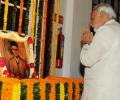
It is a question that his supporters must ask of the prime minister. It may be enjoyable for them to pass through this phase of going after other Indians. But once this has been achieved to satisfaction, then what?, questions Aakar Patel.

Overall, the record of the second term reveals a contradiction between the image and the reality. The image, especially on media and social media, is one of the man at the height of his power, and unstoppable. The reality on governance is someone who has found it difficult to get things implemented and unsure of what to do next, points out Aakar Patel.

The rhetoric that we are fed daily needs to be measured against performance and the facts. That is not happening, points out Aakar Patel.

In our mystery the watchdog agencies are silent, but it is the market that has barked and has not stopped barking. Till such time as it continues to do so, this headache will not go away, notes Aakar Patel.

Not many modern democracies have gone down this path before, setting it upon themselves to use the law and media to target citizens, points out Aakar Patel.
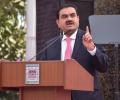
So far the government has been silent on the charges being levelled, even after the stock price rout. Perhaps it is hoping for the share price to settle so that the matter goes away, predicts Aakar Patel.

When was the last time we heard this government speaking of the disaster in primary education, rather than Ganga cruises and cheetahs? Less money -- Rs 88,000 crore -- was spent by the Union government on education in its last Budget than has been allocated to the Bullet train, notes Aakar Patel.

There is no sign of it losing popularity with a significant section of the voting population, which appears to be attracted to the party for identity reasons, observes Aakar Patel.

India's national security focus has shifted from the western border to the eastern one. But our trade with China keeps rising. This trade is against our interest, because most of it comprises of Chinese imports, argues Aakar Patel.
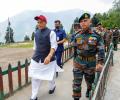
There seems to be a desire for opacity when it comes to confronting China, points out Aakar Patel.

I think the 'What-if-it-had-been-Patel?' sentiment represents a yearning for more of what we are already seeing around us in India today, observes Aakar Patel.

The most important institutions have been and are being undermined with almost no resistance, warns Aakar Patel.

But it is less adventurous. It seems, at last, that in its eighth decade, Pakistan has settled into being a parliamentary democracy just like Bangladesh has and like we have always been, observes Aakar Patel.
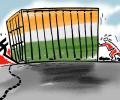
Seven years after Modi took office, merchandise exports were lower in 2020-2021 than when he had taken over from Manmohan Singh, points out Aakar Patel.

If we have not been world beaters in cricket for the longest time, here is the reason: We look down on our bowlers and deify batsmen, argues Aakar Patel.

A protest happens because the State doesn't follow its own laws. A protest is an objection and a complaint. It exists because it is otherwise unheard, observes Aakar Patel.

After 2014, our growth has been average of around 5%. If this continues, we will remain here like Egypt, Brazil, South Africa and Bangladesh, points out Aakar Patel.

Billionaires are not only eyeing a profit as they push mankind out into the stars.
It appears India will be among those nations consigned to being among the watchers and not participants of this crucial phase, observes Aakar Patel.
